
Water Softener Installation in Erie, CO
Neutralize aggressive Front Range calcium and magnesium deposits. We engineer salt-based ion-exchange softeners, whole-home carbon filtration, and reverse osmosis drinking water systems tailored to Erie's municipal water profile.
Erie's 12–18 Grains Per Gallon (GPG) Hardness
Erie tap water is classified by the USGS as extremely hard. At 12 to 18 GPG, unconditioned water etches glass shower doors. It also ruins dishwasher heating coils and chokes tankless water heater heat exchangers within 24 months.
High-Efficiency Ion-Exchange Water Softeners
Our metered, on-demand ion-exchange softening systems feature commercial-grade cross-linked resin beads that swap hard calcium and magnesium ions for harmless sodium ions. By regenerating only based on exact household water consumption, they consume up to 40% less salt and water than timer-based systems.
Whole-Home Catalytic Carbon Filtration
To protect your skin, hair, and lungs, we pair softening with catalytic carbon filtration. This removes harsh chlorine, chloramines, VOCs, and unpleasant municipal taste or odor from every tap in your residence.
Multi-Stage Reverse Osmosis (RO) & Well Water Treatment
For pure bottled-quality drinking and cooking water, we install under-sink 5-stage reverse osmosis filtration. For rural acreage properties in Weld County operating on private well water, we customize specialized iron, manganese, and sediment filter banks.
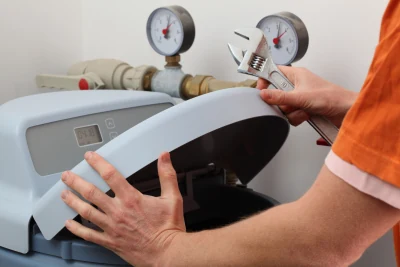
Benefits of Soft Water in Erie:
- ✨ Zero chalky white crust on faucets, shower glass & dishes
- 🛡️ Extends water heater, washer & dishwasher lifespan by 50%+
- 🧴 Uses 50% less soap, detergent, and shampoo
- 💧 Softer skin and healthier hair after every shower
Water Softener FAQs for Erie, CO
How hard is the water in Erie, CO?
Erie's municipal water supply averages 12–18 grains per gallon (GPG) of dissolved calcium and magnesium, classified as "very hard" by the Water Quality Association. This hardness level causes rapid mineral scale buildup inside water heaters, dishwashers, and plumbing fixtures, creates white crusty deposits on faucets and shower doors, and reduces soap lathering efficiency. A whole-home water softener eliminates these problems at the point of entry.
What type of water softener is best for Erie homes?
For Erie's 12–18 GPG hardness level, we recommend a properly sized ion-exchange water softener with a high-efficiency demand-initiated regeneration (DIR) control valve. This type uses food-grade sodium chloride or potassium chloride salt to exchange calcium and magnesium ions for sodium ions, completely eliminating hardness. Units are sized based on your household water consumption, number of occupants, and incoming hardness level to ensure efficient salt and water use during regeneration cycles.
Do water softeners remove contaminants like chlorine or lead?
Standard ion-exchange water softeners remove hardness minerals (calcium and magnesium) but do not remove chlorine, chloramine, lead, or other dissolved contaminants. For comprehensive water treatment, we recommend pairing a softener with a whole-home catalytic carbon filter (removes chlorine, chloramine, and sediment) or installing a point-of-use reverse osmosis system under your kitchen sink for purified drinking water. We test your water quality and recommend the appropriate filtration combination.
How much salt does a water softener use in Erie?
A properly sized water softener for a typical Erie 4-person household using approximately 300 gallons per day at 15 GPG hardness will consume roughly 40–60 pounds of salt per month. High-efficiency DIR control valves minimize salt consumption by regenerating only when the resin bed is approaching exhaustion rather than on a fixed timer schedule. We install the softener with easy-access salt storage and show you how to monitor salt level.
Where do you install the water softener in my Erie home?
We install whole-home water softeners on the main water supply line after the pressure reducing valve (PRV) and before the water heater, typically in the garage, basement, or utility room. This placement ensures every fixture and appliance in your home receives softened water. The installation includes a bypass valve for maintenance, a floor drain connection for regeneration discharge, and proper electrical supply for the control valve timer.